How to Meditate for Beginners in 8 Steps – A Spiritualhubz.com Guide
Learn how to meditate for beginners with 8 simple steps, a four-week starter plan and easy fixes for a wandering mind, restlessness and sleepiness.
On this page
If you have ever wondered how to meditate for beginners, the good news is that it is much simpler than it looks. You do not need a special cushion, a silent retreat or a blank mind. You need a few minutes, somewhere to sit and a willingness to notice what happens when you pay attention to your breath.
Many people give up on meditation within a week because they believe they are doing it wrong. Their mind keeps wandering, their knees ache or they feel nothing special. This guide explains what meditation actually asks of you, walks you through a first session step by step and gives you a four-week plan to help the habit stick.
It is part of our complete mindfulness and meditation guide, written by the Spiritualhubz.com team to be practical, inclusive and honest about what meditation can and cannot do.
What meditation is (and what it is not)
At its heart, meditation is attention training. In most beginner methods you choose an anchor, such as the breath, notice when your attention drifts away and then gently bring it back. That return is the whole exercise. Each time you do it, you strengthen your ability to step out of autopilot.
The NHS beginner guide to meditation makes the same point: a totally blank mind is not the goal, and if your mind wanders off 10 times, you simply bring it back 10 times. A session full of thoughts is still a real meditation.
Here are a few common myths that stop people before they start:
| Myth | What is actually true |
|---|---|
| You must clear your mind | Thoughts will come. Noticing them and returning is the practice. |
| You have to sit cross-legged | A chair, sofa or bed works if you feel supported and comfortable. |
| It only counts if it is long | A few focused minutes a day is a genuine start. |
| It belongs to one religion | Meditation appears in many traditions and is also taught in a fully secular way. |
| Feeling restless means it is not working | Restlessness is common, especially in the first few weeks. |
How to meditate for beginners: 8 simple steps
Read through these steps once, then try them in a single five-minute session. You can keep this page open the first few times.
1. Pick a time and link it to a habit
Choose a moment you already repeat every day, such as after your morning coffee, before you open your laptop or after you brush your teeth at night. Linking meditation to an existing habit makes it far easier to remember. Start with five minutes. The NHS suggests around 20 minutes as a useful guide over time, but consistency matters more than length at first.
2. Find a comfortable, upright position
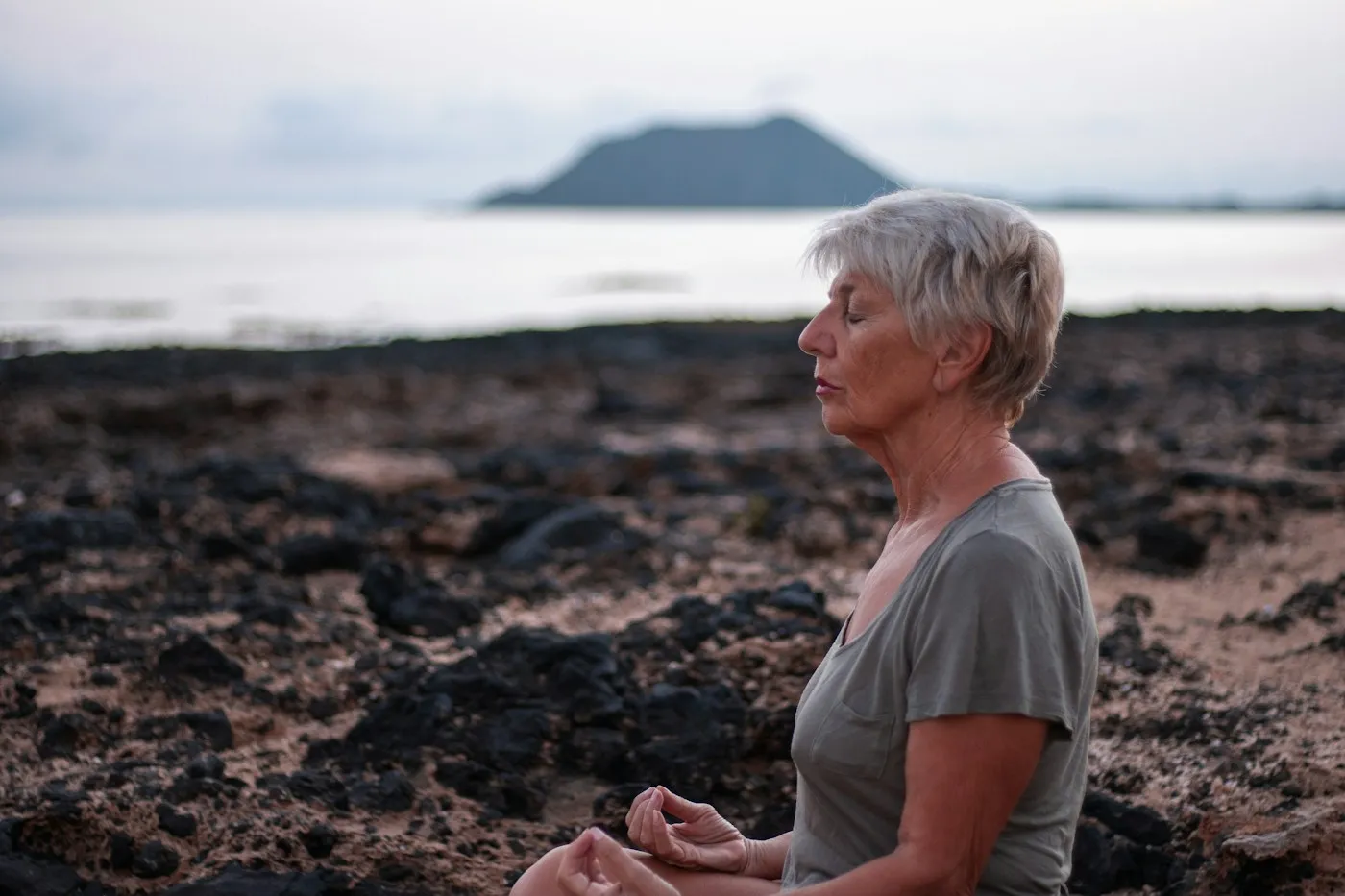
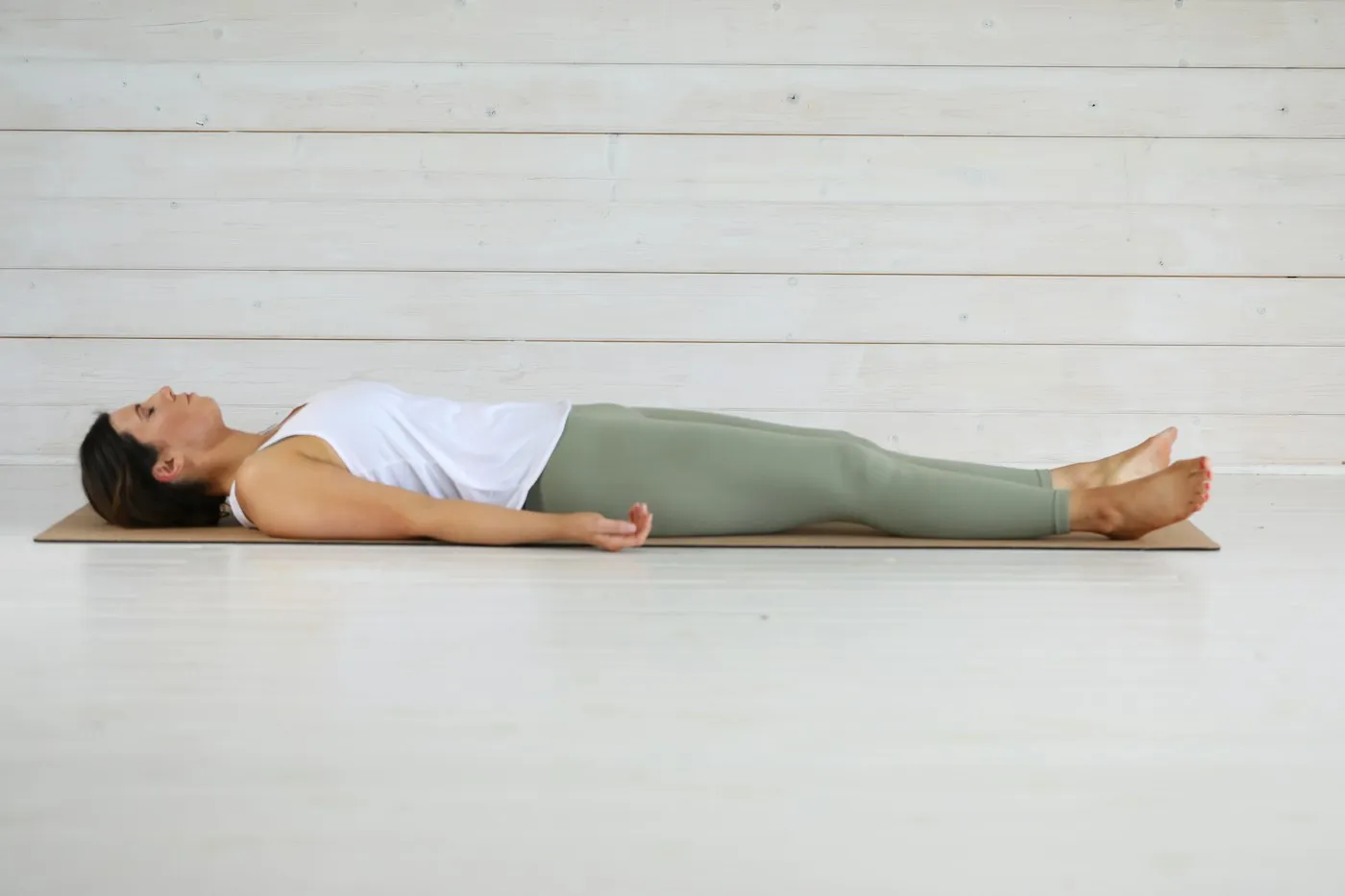
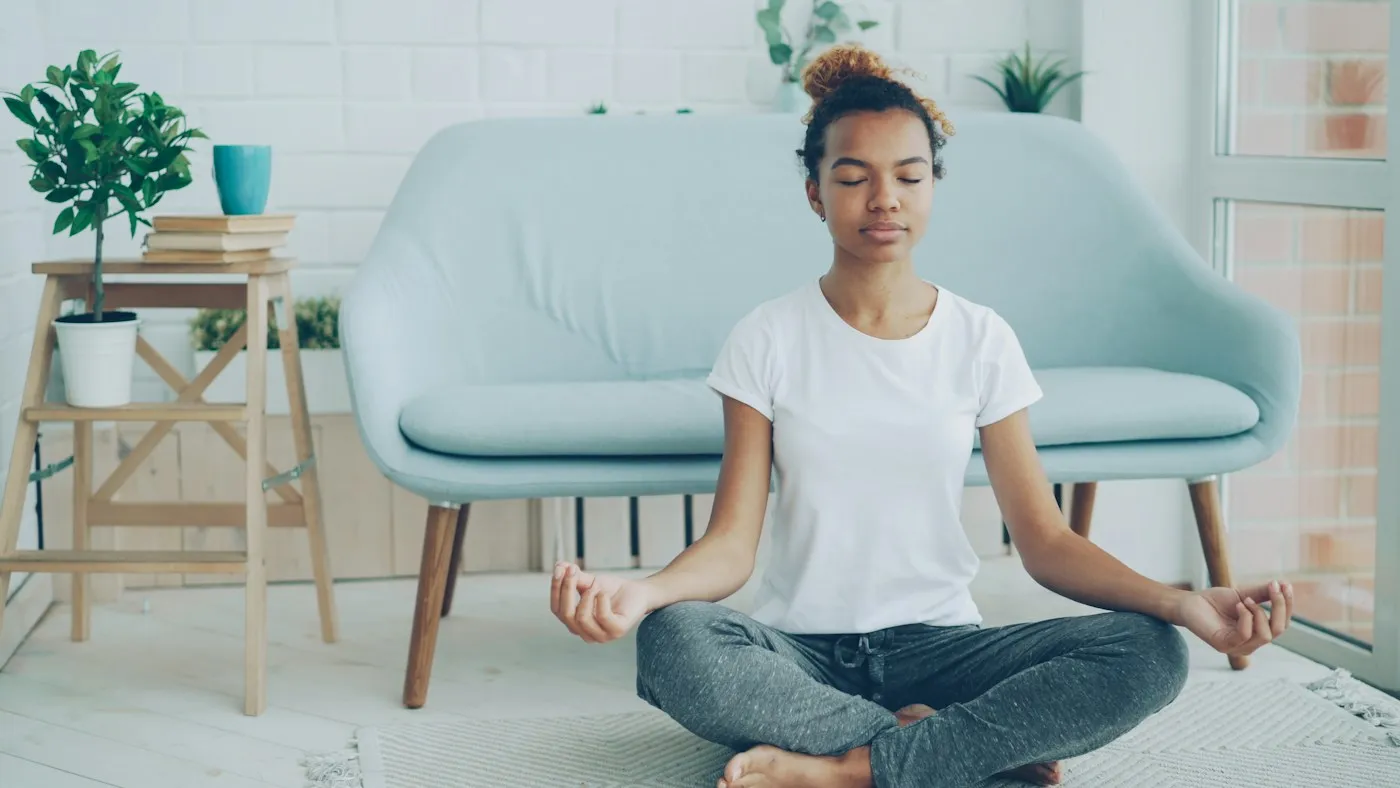
Sit on a chair with your feet flat on the floor, on a cushion, or on the edge of your bed. Aim for upright but not stiff, as if a string is gently lifting the top of your head. Rest your hands on your thighs or in your lap. If sitting hurts, lie on your back with your knees bent.
3. Set a gentle timer
A timer frees you from checking the clock. Choose a soft sound rather than a harsh alarm, and put your phone on silent or do-not-disturb mode so notifications do not interrupt you.
4. Arrive through your senses
Close your eyes or let your gaze rest on the floor a little ahead of you. For about a minute, notice where your body touches the chair or floor, what you can hear, and the temperature of the air on your skin. This helps you move out of your thinking mind and into the present.
5. Rest your attention on the breath
Notice where you feel breathing most clearly: the tip of the nose, the rise of the chest or the movement of the belly. You do not need to change your breathing. If it helps, silently say “breathing in” and “breathing out,” or count each out-breath from one to ten and then start again.
6. Notice when your mind wanders
Within a few breaths, you will probably find yourself planning dinner or replaying a conversation. This is completely normal. When you notice it, silently label it with one word, like “thinking” or “planning,” and return to the next breath.
7. Meet yourself with kindness
Beginners often scold themselves for drifting, which is just another thought. Try the opposite: treat the moment of noticing as a small success. You caught your mind wandering, and that awareness is exactly what you are training.
8. Close slowly
When the timer sounds, stop focusing on the breath but stay still for a minute. Notice how your body and mood feel, without needing them to be different. Then open your eyes, stretch and move gently into the rest of your day.
A four-week meditation plan for beginners
Small, steady steps work better than big bursts of effort. This simple plan builds from five minutes to around fifteen. Stay on a week longer if you need to. There is no prize for rushing.
| Week | Daily time | Focus | Helpful tip |
|---|---|---|---|
| 1 | 5 minutes | Counting out-breaths from one to ten | Same time and place every day |
| 2 | 8 minutes | Breath plus one-word labels for thoughts | Notice which thoughts return most often |
| 3 | 10 minutes | Start with two minutes of noticing your body, then the breath | Alternate with a guided recording |
| 4 | 10 to 15 minutes | Try one new style, such as loving-kindness | Keep a one-line note of how you felt |
Guided audio can be a great support in weeks three and four. UCLA Mindful offers free guided meditations, including a five-minute breathing meditation and a nine-minute loving-kindness practice, with recordings available in many languages.
Common beginner problems and simple fixes
Nearly everyone hits a few bumps early on. Here are the most frequent ones and what usually helps.
- “My mind will not stop.” That is expected. Shorten your session, count breaths, or try labeling thoughts. The number of thoughts does not decide whether you succeeded.
- “I keep falling asleep.” Sit more upright, keep your eyes slightly open, and avoid meditating right after a heavy meal. Some sleepiness may also be a sign you need more rest.
- “I feel fidgety and restless.” It is fine to move slowly and mindfully. Some people do better with moving practices, like the walking and daily routine ideas in our guide to mindfulness exercises.
- “My back or knees hurt.” Switch to a chair, add a cushion behind your lower back, or lie down. Comfort is not cheating.
- “I don’t feel anything.” Meditation rarely produces a dramatic feeling. Changes tend to be quiet, such as reacting a little less sharply. Our look at the benefits of meditation explains what realistic change can look like.
- “Focusing on my breath makes me anxious.” For some people, paying close attention to breathing raises anxiety. Open your eyes and anchor on sounds or the feeling of your feet on the floor instead.
Other styles to explore once you feel settled
When breath meditation feels familiar, you might experiment with different approaches:
- Body scan: slowly moving attention through the body from feet to head. Our body scan meditation guide includes a full script and a short version.
- Loving-kindness: silently repeating warm wishes, such as “May I be safe, may I be at ease,” first for yourself and then for others.
- Mantra meditation: repeating a calming word or phrase, which may be spiritual or completely secular.
- Walking meditation: feeling each step as you walk slowly, helpful if sitting still is hard.
When to talk to a professional
Meditation is a helpful self-care skill, but it is not a treatment for every problem. The National Center for Complementary and Integrative Health advises against using meditation to replace conventional care or to put off seeing a health professional. It also notes that a 2020 review found around 8 percent of participants had a negative experience, most often increased anxiety or low mood, a rate similar to that seen with psychological therapies.
Please reach out to a doctor or mental health professional if:
- Low mood, anxiety or sleep problems last two weeks or more
- Meditation brings up distressing memories, panic or a feeling of unreality that does not settle
- You have a history of trauma or serious mental illness and want to try intensive practice or retreats
If you take medication for your mental health, keep taking it as prescribed, since any changes should be made with your doctor. If you are in crisis, call or text 988 in the US, contact your local emergency number, or visit findahelpline.com.
A gentle next step
Today, try just five minutes: sit, set a timer, feel ten breaths and start again whenever you drift. That is enough to begin. Tomorrow, do it once more.
When you want new ideas, return to our mindfulness and meditation hub or explore the rest of Spiritualhubz.com for calm, practical support at your own pace.
Frequently asked questions
What is the easiest type of meditation for beginners?
For most people, breath-focused meditation is the easiest place to start. You simply rest your attention on the feeling of breathing and return to it whenever your mind drifts. Guided audio can also help, because a calm voice reminds you what to do. If focusing on the breath makes you uneasy, try listening to sounds or feeling your feet on the floor instead.
Is it OK to meditate lying down?
Yes. Lying down is a good option if sitting is painful or you have back problems. The main downside is that it is easier to fall asleep. If you want to stay alert, keep your eyes slightly open, bend your knees with feet flat on the floor, or practice earlier in the day rather than at bedtime.
What should I think about when meditating?
You do not need to think about anything in particular. Instead, you choose something to pay attention to, such as your breath, and notice when thoughts pull you away. When that happens, you can silently note 'thinking' and bring your attention back. Thoughts are expected. The skill is noticing them without getting lost in them.
How long does it take to get better at meditation?
There is no fixed timeline, and progress is rarely a straight line. Many structured mindfulness programs run for about eight weeks, which gives a sense of how long a new habit can take to settle. Early signs of progress are small, like noticing a wandering mind a little sooner or feeling slightly less rushed after a session.
Sources
This article is for general information and is not a substitute for professional medical advice, diagnosis or treatment. Read our disclaimer and how we create content in our editorial policy.