Body Scan Meditation: A Step-by-Step Script – A Spiritualhubz.com Guide
Learn body scan meditation with a full step-by-step script, a 3-minute version and a bedtime option, plus gentle tips for staying comfortable.
On this page
- What is body scan meditation?
- Why people practice body scan meditation
- A full body scan meditation script (about 15 minutes)
- Two shorter body scan meditation options
- What if you feel pain, numbness or nothing at all?
- Gentle adjustments for trauma or strong discomfort
- When to talk to a professional
- A gentle next step
Body scan meditation is a simple way to reconnect with your body when your mind feels busy, scattered or stuck in worry. You lie down or sit comfortably and move your attention slowly from your toes to the top of your head, noticing whatever sensations are there. There is nothing to fix and nothing to achieve.
Many of us spend most of the day in our heads and only notice our bodies when something hurts. A body scan reverses that pattern. It helps you catch early signs of stress, such as a clenched jaw or tight shoulders, and it can be a calming way to wind down before sleep.
This guide gives you a full script, two shorter versions and gentle adjustments for anyone who finds body-focused practice difficult. It is part of our complete mindfulness and meditation guide, created by the Spiritualhubz.com team.
What is body scan meditation?
A body scan is a mindfulness practice in which you pay attention to one area of the body at a time, in order, with curiosity rather than judgment. You might notice warmth, coolness, tingling, pressure, heaviness, itching, discomfort or no clear sensation at all. All of these are valid observations.
The Sleep Foundation describes body scans as a type of meditation that features slow, focused attention to different parts of the body, often practiced lying in bed.
It is easy to confuse a body scan with progressive muscle relaxation, but they work differently:
| Body scan | Progressive muscle relaxation | |
|---|---|---|
| What you do | Notice sensations as they are | Tense a muscle group, then release it |
| Main aim | Awareness, with relaxation as a possible side effect | Physical relaxation through contrast |
| Effort | Very gentle, no movement needed | Active, uses muscle effort |
| Good for | Building awareness, winding down | Releasing obvious physical tension |
Why people practice body scan meditation
People use the body scan for different reasons, and the benefits are often subtle rather than dramatic:
- Noticing stress early. Tension often shows up in the body before we recognize it in our thoughts.
- Quieting a busy mind. Physical sensations give your attention something concrete to rest on.
- Winding down for sleep. A slow scan in bed can help you shift from the busyness of the day toward rest.
- Relating differently to discomfort. Observing a sensation with curiosity can soften the struggle against it for some people, although results vary.
Research on mindfulness practices more broadly is promising but mixed, which our guide to the benefits of meditation explains in more detail. It is best to approach the body scan as a skill you practice, not a guaranteed cure.
A full body scan meditation script (about 15 minutes)
Before you begin
A little preparation makes the practice easier:
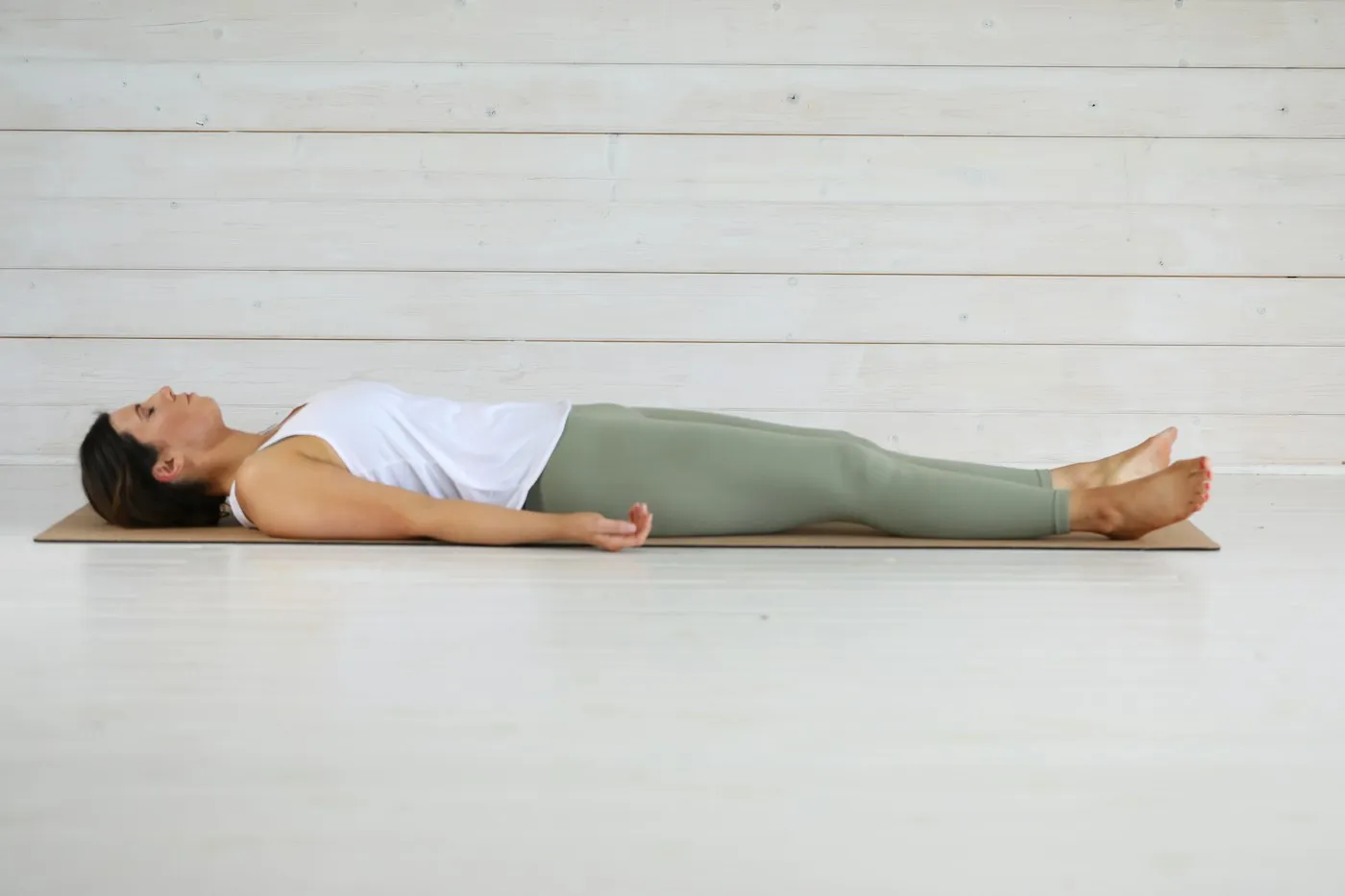
- Position: lie on your back on a bed, mat or carpet with your arms by your sides, or sit in a supportive chair with feet flat on the floor.
- Warmth: your body may cool down as you settle, so a light blanket helps.
- Time: set aside 10 to 20 minutes for a full scan, or three minutes for the short version below.
- Eyes: close them if that feels comfortable, or let your gaze rest softly on one spot.
- Attitude: remind yourself that you are here to notice, not to relax on command.
If you are new to meditation in general, our guide on how to meditate for beginners covers posture, timers and wandering thoughts.
The script
Read through the script a few times, record yourself reading it slowly, or follow along with a guided recording. Spend roughly 30 to 60 seconds on each step.
- Settle in. Let your body be fully supported by the surface beneath you. Take three breaths that are a little slower than usual, then let your breathing find its own rhythm.
- Set your intention. Silently tell yourself, “I’m going to notice, not fix.”
- Left toes. Bring your attention to the toes of your left foot. Notice any warmth, coolness, tingling or the touch of a sock or blanket. If you feel nothing, simply notice “nothing.”
- Left foot. Move to the sole, the heel, the top of the foot and the ankle.
- Left leg. Slowly travel up through the shin and calf, the knee, and the thigh. Notice where the leg touches the surface beneath it.
- Right foot and leg. Repeat the same slow path from the toes of your right foot up to the thigh.
- Hips and pelvis. Notice the weight of your hips and the points of contact with the bed or chair.
- Belly and lower back. Feel the gentle rise and fall of your belly as you breathe. Notice the lower back without trying to adjust it.
- Chest and upper back. Notice the movement of breathing in your ribs, and the shoulder blades resting against the surface.
- Hands and arms. Start with the fingertips, then the palms, wrists, forearms, elbows and upper arms. Both arms can be scanned together.
- Shoulders and neck. These are common places to hold tension. Just notice. If they soften on their own, let them.
- Face and head. Bring attention to the jaw, the tongue, the cheeks, the eyes, the forehead and finally the scalp.
- Whole body. Widen your attention to feel your body as a whole, breathing, from head to toe.
- Close gently. Wiggle your fingers and toes, stretch if you like, roll onto one side and sit up slowly when you are ready.
Whenever your mind wanders, which it will, notice where it went and return to the last body part you remember. That return is part of the practice.
Two shorter body scan meditation options
The three-minute scan
Useful at your desk, on a break or before a difficult conversation. Sit upright and spend about 20 seconds each on your feet, legs, hips, belly, chest, hands, shoulders, face and then the whole body. It is quick but still gives you a useful check-in.
The bedtime scan
Lie in bed with the lights low and follow the full script at a slower pace. Some versions, including the one suggested by the Sleep Foundation, add a step of imagining tension leaving your body with each out-breath. It is fine to fall asleep partway through.
If you prefer a guide, UCLA Mindful offers free recordings, including a three-minute short body scan and a 13-minute body scan for sleep, with transcripts you can read along with.
What if you feel pain, numbness or nothing at all?
These are among the most common beginner questions.
- Pain or discomfort: notice its edges, texture and whether it changes, without forcing yourself to stay with it. You can shift position or move your attention to a neutral area, like your hands.
- Numbness or no sensation: this is normal, especially in areas like the upper arms or back. “Nothing noticeable” is a perfectly good observation.
- Itching or restlessness: try observing the urge for a breath or two. If you still want to scratch or move, do it slowly and mindfully.
- Falling asleep: fine at bedtime. During the day, try sitting up or keeping your eyes open.
- Strong emotions: feelings sometimes surface when the body relaxes. Let them be there if you can, or pause and try again another day.
For shorter, everyday ways to reconnect with your body, our list of mindfulness exercises includes mindful walking and other practices that keep you moving.
Gentle adjustments for trauma or strong discomfort
For some people, especially those with a history of trauma, paying close attention to the body can feel unsafe or overwhelming. The National Center for Complementary and Integrative Health notes that relaxation techniques are generally considered safe, but some people occasionally report increased anxiety, intrusive thoughts or fear of losing control. There have also been rare reports of symptoms worsening in people with certain psychiatric conditions or a history of abuse or trauma.
You are always in charge of your practice. You can:
- Keep your eyes open and look around the room whenever you need to
- Sit up instead of lying down
- Skip any area of the body that feels uncomfortable
- Keep the scan short and focus on neutral places, like hands or feet
- Stop at any time and do something ordinary and grounding
When to talk to a professional
A body scan is a self-care practice, not a treatment. Please speak with a doctor, therapist or other qualified professional if:
- Body-focused practices regularly bring up panic, flashbacks or a sense of being detached from your body
- You live with chronic pain and want to use mindfulness alongside your medical care
- Anxiety, low mood or sleep problems last two weeks or more or keep getting worse
A trauma-informed therapist can help you build body awareness at a pace that feels safe. Any decisions about medication belong with your doctor. If you are in crisis, call or text 988 in the US, contact your local emergency number, or visit findahelpline.com.
A gentle next step
Tonight, try the three-minute scan before bed, or the full script if you have more time. Notice one thing that surprised you, even if it was simply how cold your feet were.
For more calm, practical tools like this one, explore Spiritualhubz.com and come back whenever your body needs a moment of attention.
Frequently asked questions
How long should a body scan meditation take?
A typical body scan takes 10 to 20 minutes, spending about 30 seconds to a minute on each area. If you are short on time, a three-minute version that sweeps quickly from feet to head still works as a helpful check-in. The best length is the one you can practice regularly without feeling rushed or pressured.
Is it OK to fall asleep during a body scan?
Yes, especially if you are doing it at bedtime to help you rest. Falling asleep is common and not a failure. If your goal is to build awareness during the day, try it sitting up, with your eyes slightly open, or earlier in the day when you are less tired. Both uses are valid.
What is the difference between a body scan and progressive muscle relaxation?
In progressive muscle relaxation, you deliberately tense a muscle group and then release it to feel the contrast. In a body scan, you do not tense anything. You simply move your attention through the body and notice what is already there. Many people find a body scan gentler, while others like the active feel of muscle relaxation.
Can a body scan help with anxiety?
Some people find it calming, because it shifts attention from worried thoughts to physical sensations and may help them notice tension early. Others find that focusing on the body raises anxiety at first. If that happens, try a shorter scan with your eyes open, or focus on neutral areas like the hands and feet. Ongoing anxiety deserves professional support.
Sources
This article is for general information and is not a substitute for professional medical advice, diagnosis or treatment. Read our disclaimer and how we create content in our editorial policy.