Grounding Techniques for Anxiety: 10 Simple Tools – A Spiritualhubz.com Guide
Try these 10 grounding techniques for anxiety, from the 5-4-3-2-1 method to quiet tools you can use at work, on a bus or in bed to feel calm and present.
On this page
When anxiety takes hold, your mind tends to race ahead to what might go wrong or loop back over what already did. Grounding techniques for anxiety do something simple but useful: they pull your attention back to the present moment, using your senses, your body and a few easy mental tasks. You cannot argue your way out of a surge of anxiety in the moment, but you can give your brain something steadier to hold onto.
In this helpful guide, the Spiritualhubz.com team shares 10 grounding techniques you can use almost anywhere, plus tips on choosing the right one for the situation you are in. It is part of our complete anxiety relief guide, and like everything we publish, it is written to be practical first.
You do not need special equipment or a quiet room. You only need a minute and a willingness to try.
What grounding is and why it helps
Grounding is a set of coping skills that shift your focus away from distressing thoughts or feelings and toward the here and now. When you are anxious, your attention narrows onto possible threats. Your thoughts jump to the future (“What if I fail?”) and your body stays on high alert.
Grounding interrupts that loop in two ways. First, it gives your mind a neutral, concrete task, such as naming colors or feeling the texture of your sleeve. Second, many grounding methods also calm the body directly. Slow breathing and muscle relaxation help bring on what the National Center for Complementary and Integrative Health calls the relaxation response: slower breathing, lower blood pressure and a reduced heart rate.
Grounding will not solve the problem you are worried about. What it can do is bring your anxiety down far enough that you can think clearly, make a decision or simply get through the next few minutes.
How to choose the right grounding technique for anxiety
Different situations call for different tools. A technique that works well at home might feel awkward in a meeting. Use this table as a quick guide.
| Situation | Try this | Why it fits |
|---|---|---|
| At work or in public | Feet on the floor, texture focus, categories game | Quiet and invisible to others |
| At home and overwhelmed | Cool water, 5-4-3-2-1, wall push | Strong sensations cut through quickly |
| Racing thoughts in bed | Slow belly breathing, tense and release | Gentle and calming, not stimulating |
| Feeling spaced out or unreal | Orientation statement, narrate the room | Reconnects you with time and place |
| Building a daily habit | Any one technique for 2 minutes | Familiar skills are easier under stress |
A simple rule of thumb: when anxiety is high, choose something strong and physical. When it is moderate, a mental technique may be enough.
10 grounding techniques for anxiety you can use anywhere
The techniques below fall into three groups: sensory, physical and mental. Try a few and keep the ones that feel natural to you.
Sensory grounding
1. The 5-4-3-2-1 method. Name, silently or out loud:
- 5 things you can see
- 4 things you can feel (your chair, your clothes, the air on your skin)
- 3 things you can hear
- 2 things you can smell
- 1 thing you can taste
Go slowly and be specific. “A blue mug with a chip on the handle” works better than “a mug.” The detail is what holds your attention.
2. Change the temperature. Hold a cold drink, splash cool water on your face, or run your hands under cool water for 30 seconds. A clear change in temperature is hard to ignore, so it pulls your attention into the present. Keep it comfortably cool rather than icy.
3. Hold a grounding object. Keep a small object with an interesting texture in your pocket, such as a smooth stone, a keyring or a scrap of soft fabric. When anxiety rises, hold it and describe it to yourself: its weight, edges, temperature and surface.
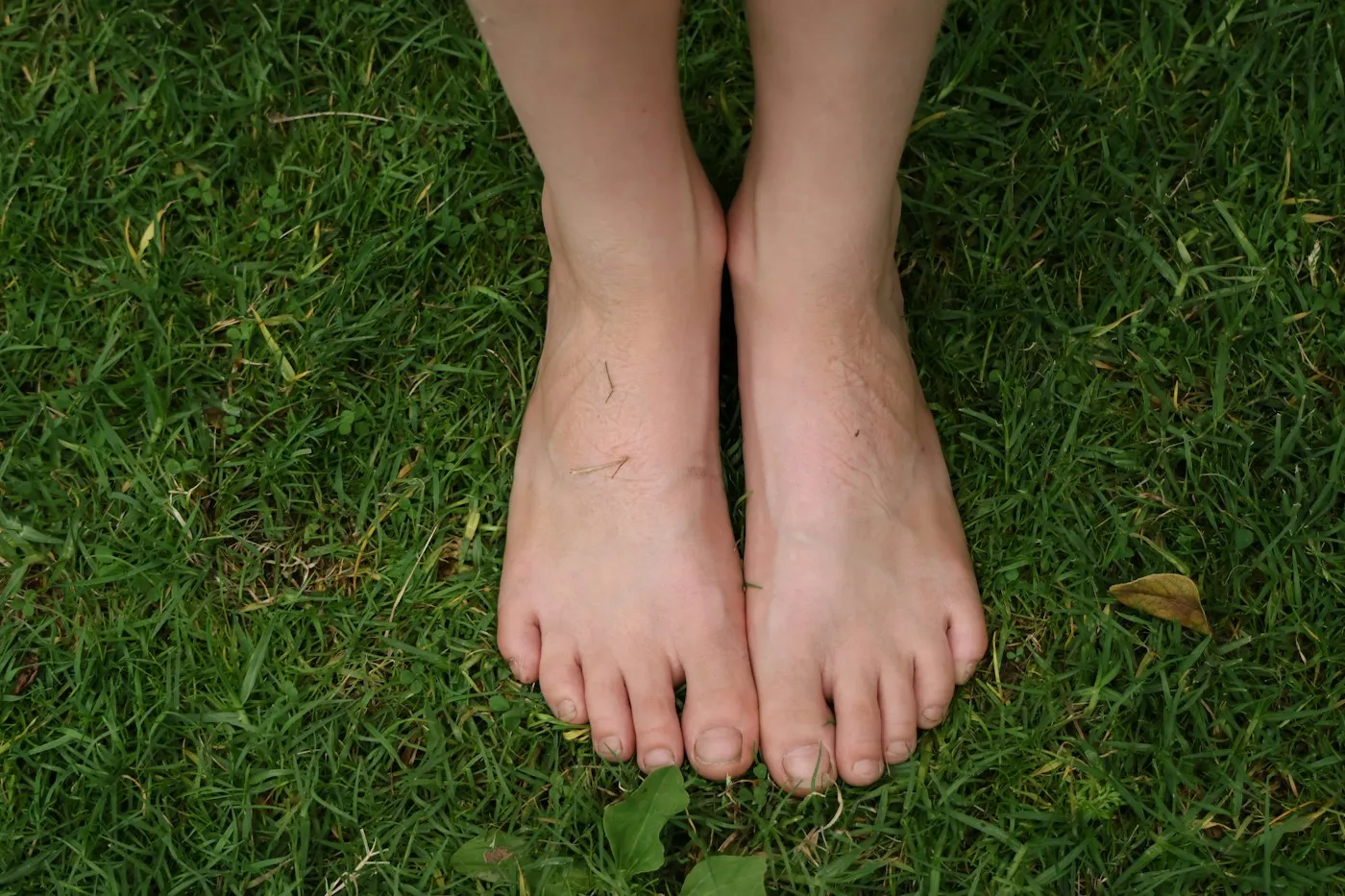
4. Feel your feet. Press your feet firmly into the floor. Notice the pressure through your heels and toes, the feel of your socks or shoes, and the solid ground beneath you. This one is completely invisible, which makes it ideal for meetings, lines and waiting rooms.
Physical grounding
5. Slow belly breathing. Place one hand on your belly. Breathe in gently through your nose and let your belly rise, then breathe out slowly through your mouth. The NHS breathing exercise for stress suggests counting steadily from 1 to 5 on each breath in and out, if that feels comfortable, and continuing for at least five minutes. Do not force big breaths. Gentle and steady is the goal.
6. Tense and release. Clench your fists tightly for about five seconds, then let go and notice the difference for ten seconds. Repeat with your shoulders (lift them toward your ears), then your feet (curl your toes). This is a short version of progressive muscle relaxation, one of the relaxation techniques researchers have studied most.
7. Push against a wall. Stand facing a wall, place your palms flat on it and push firmly for 10 to 15 seconds, as if trying to move it. Feel your arms, back and legs working. Release and repeat twice. This gives the restless energy of anxiety somewhere to go.
Mental grounding
8. Play the categories game. Pick a category and list as many items as you can: dog breeds, fruits, cities starting with “B,” or songs from a favorite album. The task is easy enough to do while anxious but demanding enough to crowd out worry.
9. Narrate your surroundings. Describe where you are as if explaining it to someone on the phone. “I’m in the kitchen. The light over the stove is on. There’s a green towel on the oven door.” Keep it factual and skip any judgments.
10. Use an orientation statement. Say to yourself: “My name is ___. Today is [day and date]. I am in [place]. I am safe right now, and this feeling will pass.” This is especially helpful if anxiety makes you feel detached, foggy or unreal.
Grounding in real-life situations
Here is how these tools can fit into ordinary moments:
- Before a presentation: Feel your feet on the floor while you wait, then take three slow breaths with a long, easy exhale before you stand up.
- In a crowded store or train: Hold your grounding object and name five things you can see, one color at a time.
- After a difficult phone call: Wash your hands in cool water, then narrate what you see in the room for one minute.
- When a wave of panic starts: Choose a strong sensory tool first, then add slow breathing. For a full plan, see our step-by-step guide on how to calm a panic attack.
- When the same worry keeps replaying: Grounding can pause the loop, but longer-term strategies help it stay quiet. Our guide on how to stop overthinking covers those in depth.
How to make grounding work better
A few habits make these techniques more effective:
- Practice when you are calm. Skills are easier to use under stress if they already feel familiar. Try one technique for two minutes a day, perhaps with your morning coffee.
- Pair it with a cue word. Choose a short word like “here” or “now” and repeat it as you ground yourself. Over time, the word alone can remind you to come back to the present.
- Expect the feeling to shift, not vanish. Grounding usually lowers anxiety rather than removing it. A drop from 8 out of 10 to 5 out of 10 is a real success.
- Use it to stay, not to escape. Grounding works best as a way to remain in a hard situation, not as a way to avoid every uncomfortable feeling. Avoidance tends to keep anxiety going over time.
- Learn your early warning signs. Many people feel anxiety first as a tight chest, a churning stomach or shaky hands. Spotting these early gives you more time to ground yourself. Our article on the physical symptoms of anxiety explains these signals in detail.
NHS Every Mind Matters notes that some people find mindfulness, meditation and breathing exercises help calm anxiety by focusing awareness on the present moment. Grounding is a close cousin of those practices, so if it works for you, a regular mindfulness habit may be worth exploring later.
When to talk to a professional
Grounding is a helpful short-term coping skill, but on its own it is not a treatment for an anxiety disorder. Consider speaking to a doctor or licensed therapist if:
- you need to ground yourself many times a day just to get by
- anxiety keeps you from work, school, relationships or leaving the house
- you often feel detached from your body or surroundings
- you have flashbacks or intrusive memories of a traumatic event
- you are having frequent panic attacks
A therapist can teach grounding as part of a wider plan, such as cognitive behavioral therapy, and help you work on what is driving the anxiety. If you ever feel unable to keep yourself safe, call your local emergency number. In the US, you can call or text 988 at any time.
A gentle next step
Choose one technique from this list, just one, and practice it for two minutes today while you feel relatively calm. Tomorrow, try it again. The aim is to make grounding feel as familiar as tying your shoes, so it is ready when you need it.
When you want more tools, return to our full anxiety relief guide for help with panic, overthinking, body symptoms and social fears. The Spiritualhubz.com team adds new practical guides regularly, each one written in plain language and checked against trusted health sources.
Frequently asked questions
What is the 5-4-3-2-1 grounding technique?
It is a sensory exercise where you name five things you can see, four things you can feel, three you can hear, two you can smell and one you can taste. Moving through each sense gives your mind a simple, concrete task, which draws attention away from anxious thoughts and back to your surroundings. Going slowly and describing each item in detail makes it more effective.
How quickly do grounding techniques work?
Many people notice some relief within a few minutes, although it varies from person to person and from day to day. Grounding usually lowers anxiety rather than removing it completely. It tends to work faster and more reliably when you have practiced the technique beforehand, while you were calm, so it already feels familiar when you need it.
Is grounding the same as mindfulness?
They are closely related, since both bring your attention to the present moment. Grounding is usually a short, practical tool for managing a spike of distress, often using strong sensory input like cool water or pressing your feet into the floor. Mindfulness is a broader practice of noticing thoughts and sensations without judgment, usually built through regular meditation.
Can grounding techniques make anxiety worse?
For most people they are safe and helpful. Some people find that focusing on their breathing or heartbeat makes them more aware of anxious sensations. If that happens, switch to an outward-focused technique, such as naming objects around you or the categories game. If grounding brings up distressing memories related to trauma, it is best to practice with a therapist.
Sources
This article is for general information and is not a substitute for professional medical advice, diagnosis or treatment. Read our disclaimer and how we create content in our editorial policy.